2025
Unique Work
Materials: Kevlar cloth, epoxy resin, EPS foam, Tmber (KVH), OSB, XPS underlayment
jeromebyron.com
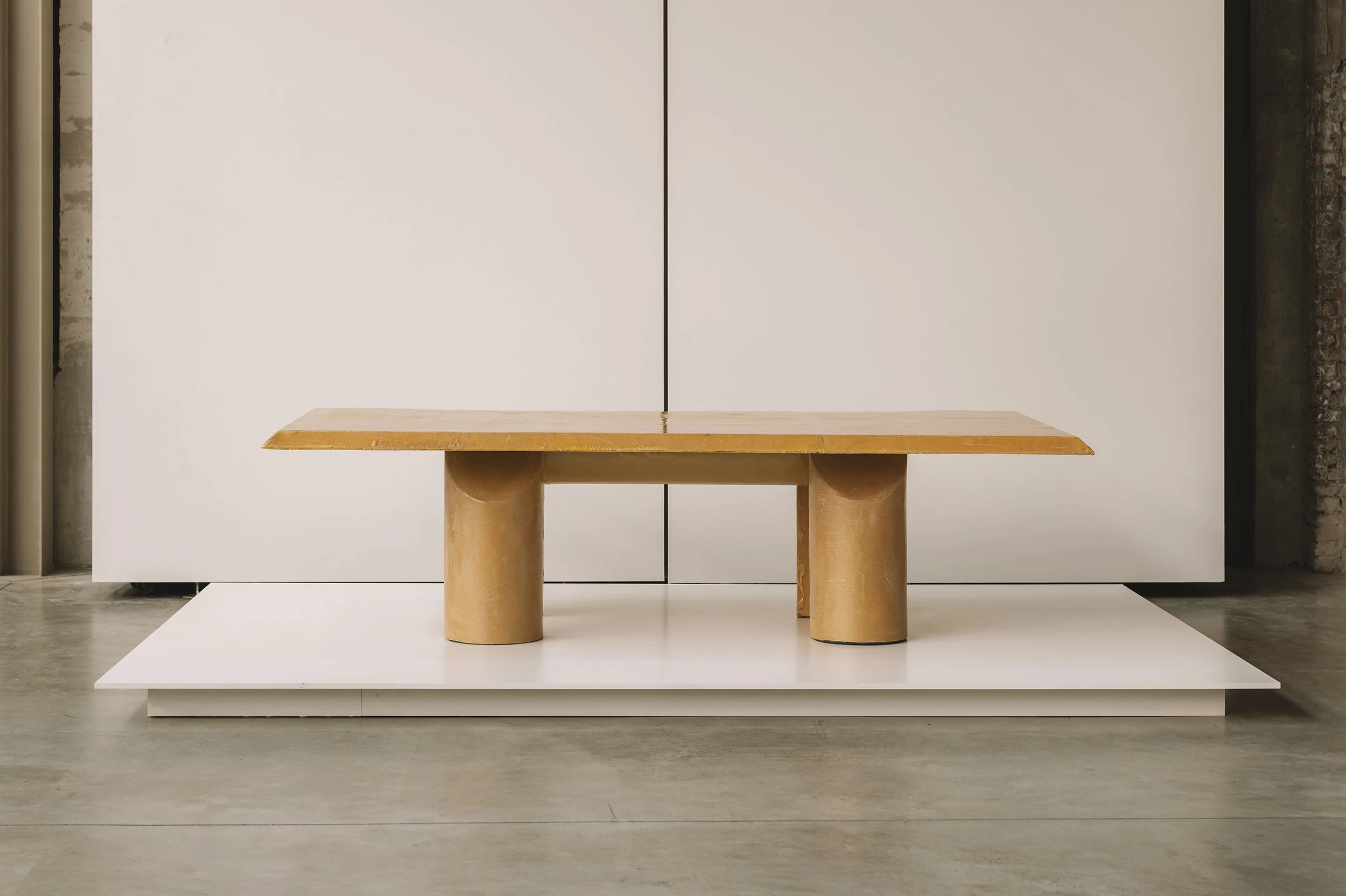
In response to recent ICE raids and increasing police violence, American architect-designer Jerome Byron debuts his new work, Everyday Altar, a kitchen table made with kevlar. Designed as a reflection on the vulnerability of Black and brown communities in Los Angeles (Byron’s longtime home) and around the world, the work prompts consideration of the idea of safe spaces, the inviolability of gathering spaces, and the ways material, surface, and form can reinforce power structures. The bright yellow kevlar—in moments appearing rough, even raw—and the work’s generous form simultaneously evoke the stress that the current atmosphere imposes on individual bodies and communities, and the inalienable strength and solace we find when we come together.

As Byron explains, “In times of unrest, even the most ordinary objects can take on extraordinary roles. A chair becomes a barricade. A park bench, a shield. A kitchen table, once a place of nourishment and routine, becomes a site of defense, of grief, of solidarity.

“Everyday Altar begins here. This sculptural dining table, hand-formed from Kevlar and resin over a foam and wood core, repositions a material rooted in enforcement into a gesture of protection and care. The bright yellow weave, left raw and visible, holds the tension between utility and symbolism. Kevlar, first developed in the 1960s for the automotive industry, later became synonymous with body armor, riot shields, and militarized control. Its tensile strength—measured in resistance, not aggression—becomes a metaphor for collective endurance. Here, that legacy is neither erased nor glorified, but transformed. Its structure becomes support. Its surface, in moments worn, and a statement.

“The work draws from altar traditions found in Afro-diasporic, Indigenous, and spiritual practices, where domestic space becomes sacred and the sacred becomes a form of refuge. From wartime kitchens to diasporic homes, makeshift shrines have long protected what public systems fail to: memory, safety, presence.

“Created in response to recent ICE raids and increasing police violence in the US and around the globe—and in particular attacks on vulnerable communities in my own former hometown of LA—Everyday Altar speaks to the precarity of Black and brown lives and the tensions embedded in how space is made, used, and claimed. It calls into question the very notion of safe spaces, and the sanctity of our everyday gathering spaces, within inequitable and violent systems. As a Black architect working at the scale of furniture, I’m interested in how brutality embeds itself not in the abstract, but in bedrooms, in kitchens, in the soft architecture of daily life—the spaces where people gather, rest, or hide.

“Domestic but not passive, monumental but not removed, Everyday Altar is not a solution. It’s a holding ground: a site for gathering, for reflection, and for bearing the weight together. In a world where public systems fail to offer safety, the altar becomes an architecture of last resort.