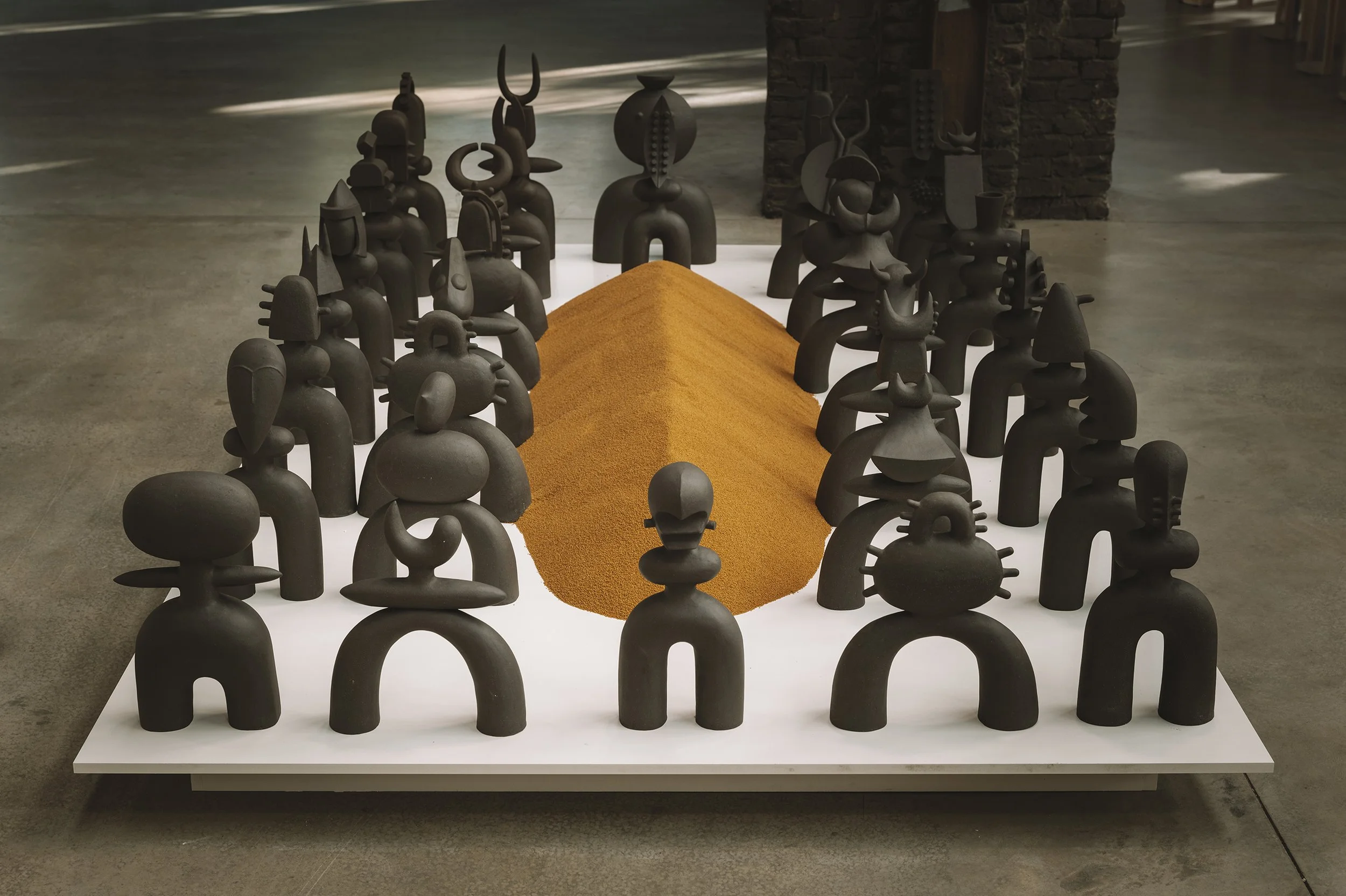
Both 2025
Unique Works
Haniwa Warriors Materials: High fired black stoneware sculpture
Jōmon Vessels Materials: High fired white stoneware sculpture
noekuremoto.com
London-based Japanese ceramicist Noe Kuremoto grounds her practice in the complexities of modern life. Her hand-sculpted forms, with their childlike purity and quiet simplicity, offer a counterpoint: a return to something instinctual, ancient, and forgotten. Here, she presents two contemporary interpretations of Japanese talismans, envisioned as quiet guardians. Her Haniwa Warriors draw from clay figures of the Kofun period (c. 300–538 AD), originally buried with the dead to protect their souls in the afterlife. Reimagined for today, Kuremoto’s black stoneware warriors stand watch over the living, offering protection, solace, and encouragement.

Debuting alongside them, within 41.0, are her Jōmon Vessels, inspired by the world’s earliest known pottery, dating back to the Jōmon period (14,000–300 BCE). Traditionally used in both daily life and ritual—fertility, childbirth, sustenance—these sculptural, white stoneware vessels are recast as celebrations of womanhood and motherhood in all their complexity, as the artist navigates and wrestles with her own motherhood. For Kuremoto, they carry intergenerational forgotten wisdom and a profound connection to both the spiritual and natural worlds. As she reflects: “I see art and parenthood as vehicles to pass on infinity to the next generation.”